New Book: Animal Spirits: A Bestiary of the Commons

Italian Vogue 2007: Make Love Not War

After a decade of digital fetishism, the spectres of the financial and energy crisis have also affected new media culture and brought into question the autonomy of networks. Yet activism and the art world still celebrate Creative Commons and the ‘creative cities’ as the new ideals for the Internet generation. Unmasking the animal spirits of the commons, Matteo Pasquinelli identifies the key social conflicts and business models at work behind the rhetoric of Free Culture. The corporate parasite infiltrating file-sharing networks, the hydra of gentrification in ‘creative cities’ such as Berlin and the bicephalous nature of the Internet with its pornographic underworld are three untold dimensions of contemporary ‘politics of the common’. Against the latent puritanism of authors like Baudrillard and Zizek, constantly quoted by both artists and activists, Animal Spirits draws a conceptual ‘book of beasts’. In a world system shaped by a turbulent stock market, Pasquinelli unleashes a politically incorrect grammar for the coming generation of the new commons. Read the Metamute Review
More Privatisation in Greece?

Despite (or because of) the crisis, investors see opportunities in Greece for more privatisation and for Public Private Partnership (PPP) projects.

The Business Monitor International (BMI) considers Greece’s infrastructure sector “one of the most attractive in Europe” and lists state-owned assets as an example: “Parts of state owned railway group, OSE are expected to be on the list, as well as non-controlling stakes in utilities such as: EYDAP, owner and operator of water and wastewater systems in Athens; EYATH, owner and operator of water and wastewater systems in Thessaloniki; and, DEPA, the owner and operator or natural gas infrastructure in Greece. In total, the government is hoping to raise close to EUR1.5bn from this venture.”

Read more | ›››

The Concept of Living Well

In April 2010 a Peoples’ Conference on Climate Change was held in Cochabamba, Bolivia. A Final Declaration was adopted on April 22. There were interesting discussions with activists from indigenous movements, for instance on the concept of “living well“. “We suffer the severe effects of climate change, of the energy, food and financial crises. This is not the product of human beings in general, but of the existing inhuman capitalist system, with its unlimited industrial development. It is brought about by minority groups who control world power, concentrating wealth and power on themselves alone. Concentrating capital in only a few hands is no solution for humanity, neither for life itself, because as a consequence many lives are lost in floods, by intervention or by wars, so many lives through hunger, poverty and usually curable diseases.”

The Emergence of Open Design and Open Manufacturing

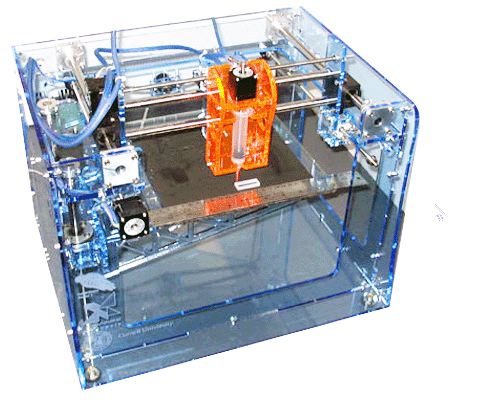
FabberA digital fabricator (commonly shortened to fabber) is a small, self-contained factory that can make objects described by digital data. Fabbers make three-dimensional, solid objects that can be used as models, as prototypes, or as delivered products. It is very tempting to limit Open Source to the field of immaterial production, but the same method of production that has come to dominate the world of software and content on the internet, is now also deeply influencing the way of thinking about designing and even making things. Read more

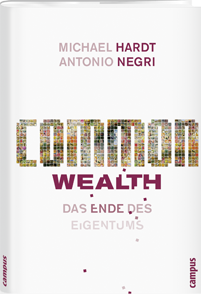
New Book: Commonwealth by Negri/Hardt

Negri/Hardt: Common WealthCommonwealth is the latest collaboration between Michael Hardt, a Duke University professor who specializes in Italian literature, and Toni Negri, an original member of the radical Autonomia group in Italy. Negri is the more colorful of the two, having at one time been accused of being the intellectual leader of the Red Brigades terrorists who in 1978 kidnapped and murdered former Italian Prime Minister Aldo Moro. Negri fled to France and lived in exile before returning to Italy in 1997 to serve out the remainder of a reduced prison sentence on a lesser charge.)Commonwealth concludes the trilogy that started with Empire (2000) and continued with Multitude: War and Democracy in the Age of Empire (2004), both also from Harvard University Press. Read more
NYC: Conference “The Privatization of Public Space? Resisting Enclosure”

Neoliberalism continues to transform public space in geographically uneven and variegated ways, with far reaching and profound consequences.  On the first day, the conference will provide context for various means of privatization and elaborate on language and visions for discussing this issue.  On the second day, workshops will bring together students, activists, artists, and organizations engaged in imagining and practicing new and creative means of resistance to the new round of enclosures taking place on a global scale.

Read more | ›››

Visualizing Consolidation in the Global Seed Industry: 1996–2008

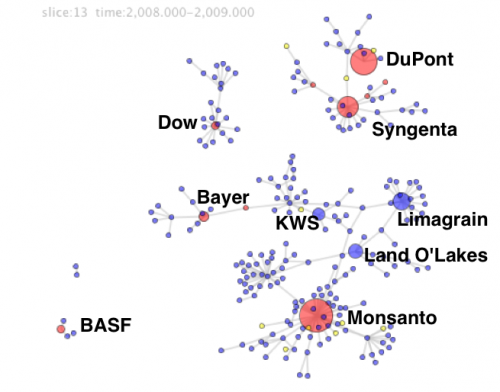
agThe commercial seed industry has undergone tremendous consolidation in the last 40 years as transnational corporations entered this agricultural sector, and acquired or merged with competing firms. This trend is associated with impacts that constrain the opportunities for renewable agriculture, such as reductions in seed lines and a declining prevalence of seed saving. To better characterize the current structure of the industry, ownership changes from 1996 to 2008 are represented visually with information graphics. Since the commercialization of transgenic crops in the mid-1990s, the sale of seeds has become dominated globally by Monsanto, DuPont and Syngenta. In addition, the largest firms are increasingly networked through agreements to cross-license transgenic seed traits. Read more

What happens after privatizing the pension system?

sparzeichenThe pension reforms of the years 2000 until 2007 were supposed to attenuate the foreseeable effects of demographic change on the pension system. This is why the retirement age was raised, the pension level was lowered and a so-called sustainability factor (“Nachhaltigkeitsfaktor”) was introduced into the pension formula. This approach meant a fundamental change of objectives – from safeguarding living standards in retirement to the stability of contribution rates. The lower future pension level is to be complemented by the subsidised formation of a private capital stock (“Riester pension”) without employer participation. The analysis of the macroeconomic consequences of this reform shows that the chosen policy of enhanced funding both dampens growth and leads to insufficient income in old age. Thus the current strategy is not suitable for alleviating the demographic burden. Read more (in German language)
Futures Group about the future of food

The Futures Group looks at possible futures in the timeline 2020-25 for opportunities and threats. It straddles both Asian and Western perspectives. In their own words:

Trends/shifts are like seeds today. Some seeds sprout to become towering trees, some seeds will grow for a short while but have no staying power and will die off. Some seeds never make it. What we try to do is make an educated guess how these seeds will contribute to the forest of tomorrow. Then we backcast and ask “How do we prepare ourselves to survive and thrive in this forest?” We’ve covered a variety of topics from Arctic Melt, Food, Global Cities to Little economy, Augmented human beings, Batteries and Electric Cars.

Read more

World Water Day in March 2010

waterweek Monday March 22 is World Water Day. To mark the day, TVO Canada, Ontario’s public educational media organization, will air a week of water-themed programming featuring the world premiere of the Canadian documentary Water on the Table on March 24, 2010 (written, directed and produced by Liz Marshall), and encores of films that examine political, economic and environmental issues dealing with water quality and availability.

Read more | ›››

The Story of Bottled Water

bottledwater
bottledwater

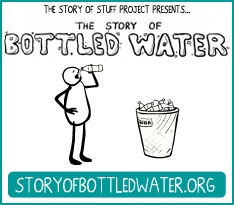
The Story of Bottled Water, releasing March 22, 2010, employs the Story of Stuff style to tell the fast-paced, fact-filled story of manufactured demand—how you get Americans to buy more than half a billion bottles of water every week when it already flows from the tap. Over five minutes, the film explores the bottled water industry’s attacks on tap water and its use of seductive, environmental-themed advertising to cover up the mountains of plastic waste it produces. The film concludes with a call to take back the tap, not only by making a personal commitment to avoid bottled water, but by supporting investments in clean, available tap water for all.

Whopools.net

whopools.netWhopools.net is a open source online tool to share resources, knowledge, experiences, infrastructure and things with others. For instance: Wood to build shelves (or sth. else), a saw, or a sewing machine, drill press, videos, music, books, a car, computers with the possibility of printing, etc. in your local neighbourhood.

At Whopools.net, you can also share skills, talents or special knowledge.
Read more about whopools.net