Financial Crisis’ Impacts on Public Services and PPP

PSIRU researches the privatisation and restructuring of public services around the world, with special focus on water, energy, waste management, and healthcare. It produces reports and maintains an extensive database on the multinational companies involved and on the financial crisis’ impacts on public services and PPP.

The first paper examines the impact of the economic crisis on public services, including government reponses and implications for companies operating in public services. Download Economic crisis and public services – note 1 December 2008

The second paper focusses on credit squeeze and recession, which are combining to make PPPs almost impossible to finance, anywhere in the world. Traditional government borrowing and procurement can still be used to implement infrastructure programmes. Download Crisis note 2: A crisis for PPPs? January 2009

This core database is financed by Public Services International (PSI), the global confederation of public service trade unions.
Nearly 500 enterprises privatized since 2003 in Algeria

Some 447 enterprises have been privatized in Algeria since 2003, making the Treasury obtain some 1.4 billion euros, declared Thursday the Algerian Minister of Industry and Investment Promotion Hamid Temmar.
“The revenue from the sale of public enterprises under privatization is estimated at 137 billion dinars (1.37 billion euros),” said Temmar, quoted by the APS news agency. “These recipes involve the privatization of 447 public enterprises during the period from 2003 until the first quarter of 2008,” said the minister, answering an oral question in the National Assembly. According to Mr. Temmar, these privatizations have allowed the preservation of 40,000 jobs and the creation over 19,000 new jobs.” The Algerian government has repeatedly reaffirmed its commitment to privatize the state enterprises, which are too weighty to manage, except those so-called “strategic” or “of sovereignty” such as the oil company Sonatrach, electricity and gas Sonelgaz and railways.
Source: ennaharonline

State-owned Wealth Funds (SWFs)

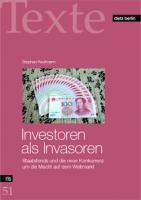
texte-51_250_01.jpgWestern politicians, business leaders and commentators seem paranoid about state-owned sovereign wealth funds (SWFs), particularly those from the Middle East and China. They fear that SWFs follow strategic political objectives — investing in Western companies and banks to secure control of strategically important industries such as telecommunications, energy and banking — rather than commercial interests. Read more

The New Gold Rush

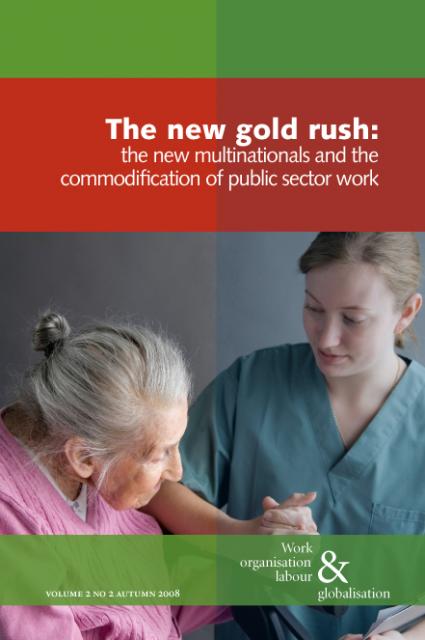
newgoldrush.jpgThe new multinationals and the commodification of public sector work; in: Work Organisation Labour and Globalisation, Vol 2, No 2, – an interdisciplinary, international journal:
Over the past few years a new breed of multinationals has arrived, almost unnoticed, on the scene. Like early capitalist adventurers, they have found a rich new source of wealth to exploit. But this seam of gold is to be found, not in the mountains of California or the depths of Africa but at the very heart of the welfare states of the developed world.

This important collection of essays anatomises the emergence of the ‘public services industry’ and analyses the way in which government services have been commodified so that they can be privatised or outsourced. It charts the growth of the global companies that have sprung up to supply these services and documents the devastating impact on workers, including work intensification, casualisation, loss of union protection and erosion of occupational identities. It also explores the changing relationship between the state and the private sector and the implications for democracy of developments which transform citizens into shoppers.

Required reading for anyone who wants to know what privatisation means for workers.

For more information go to: www.analyticapublications.co.uk
Published by Merlin Press, ISBN: 978 0 85036 610 5, 178 pages paperback, price £14.95 or available on subscription (ISSN: 1745-6451X)

Taking it Private. Consequences of the Global Growth of Private Equity

The Corner House presents research about private equity that during the last two decades became an integral component of the world’s financial system – at a time when financial markets overshadowed the productive economy. Private equity was invariably behind the multi-billion buyout deals, and mergers and acquisitions that swept across the US and Europe, creating a new type of corporate conglomerate that is reshaping the way business is conducted.
Insofar as it constitutes a new form of corporate ownership, private equity poses new challenges to labour unions, NGOs and community groups because it has a significant and distinctive influence on taxation policy, corporate governance, labour rights and public services, and thus deeply affects society, human rights and environment alike.
These challenges are especially clear in Asia, which has become more attractive for private equity firms since mid-2007 when the “credit crunch” took hold and diminished the scope for the huge deals in Europe and North America.
This 54 page ‘work in progress’ paper (339KB) looks at the global growth of private equity and its social, environmental and political impacts, using India as a case study of its growing importance in Southern countries. It concludes with an outline of private equity’s vulnerabilities that may provide opportunities for public concerns to be addressed.

Symbian software license revisited

The single editor blog “Boycott Novell” asks the question that moves many progressive cellular users: Is Symbian really open source? And if so, then what is the meaning of open source compared to — let us say — Free software in its purer form? The answer contains an instructive piece about software licences, patents and power politics in the programmers world. Read more

Paris Water public at the end of 2009

When the Mayor of Paris, Bertrand Delanoë was relected in March 2008, the vote gave him a mandate to return Paris’ water services to a public-run service. The electoral promise came after a broad campaign, triggered by rising prices, and following his re-election, the Mayor’s office announced in June 2008 that the remunicipalisation would go ahead. Water services in Paris, privatised in 1985, will be run as a single public-owned and managed company, Eau de Paris, from 2009. Read more

German Federal Archives donate 100.000 image files to Wikimedia Commons

Starting on Thursday Dec 4, 2008, Wikimedia Commons witnessed a massive upload of new images. It received nearly 100,000 files from a donation from the German Federal Archives. These images are mostly related to the history of Germany (including the German Democratic Republic) and are part of a cooperation between Wikimedia Germany and the Federal Archives. Read more

Privatization from a left perspective

From a left perspective, whoownstheworld.org, established by network ppg (privatization, public goods) and RLS, examines impacts of privatization on the (re-)distribution of social ressources, on the (re-)distribution of political “goods” (effects of domination, democracy, participation, and access) and on the dimension of political/social conflicts. The network analyzes the interrelations between property, domination and equality.

Read more | ›››

Financial Crisis. Does it affect us?

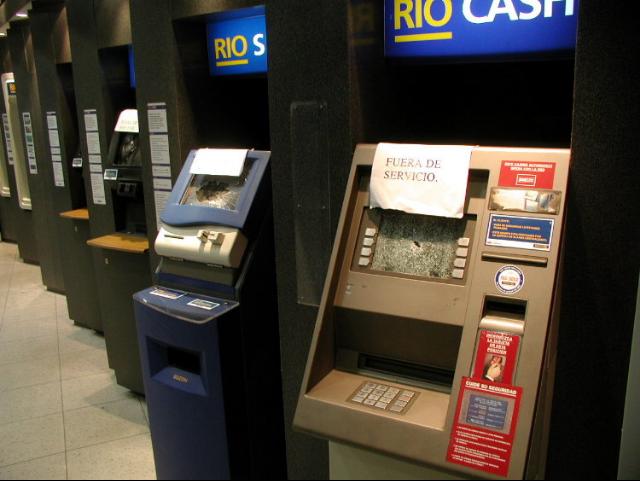
20505.jpgFinancial Meltdown. The US- government has agreed to a 700 bn bail-out to rescue the financial market. The largest bail-out of all times. This is all highly dramatic. However, despite all the drastic measures, there are contradictory messages: The banking system as a whole is not under threat. The private savings are supposedly safe. The consequences of the huge bankruptcies in the US for Europe/ Germany/ the global financial system are unpredictable. Additionally, there are these experts who voice their concern in a refreshingly open fashion: we do not really know what is going on (first hints are collected at the RLS City Crash Counter), what is connected to what (for more hints on that see “Capitalism Hits the Fan”) and what is going to happen next.

Read more | ›››